CBT Worksheet: Asking for Forgiveness

The seeking-forgiveness work in the Enright and Worthington protocols depends on a sequence the client almost always wants to skip.
The order is:
name what you did,
name the harm caused,
take responsibility,
assure non-repetition,
apologise,
then forgive yourself.
Most clients arrive wanting to start at the apology because the apology is the part that feels active. The earlier steps are where the therapy actually happens.
This worksheet runs the seven steps as separate fields, so the client can’t collapse them. The first is a short-text identifier (initials or a relationship word, never a full name) for the person being addressed.
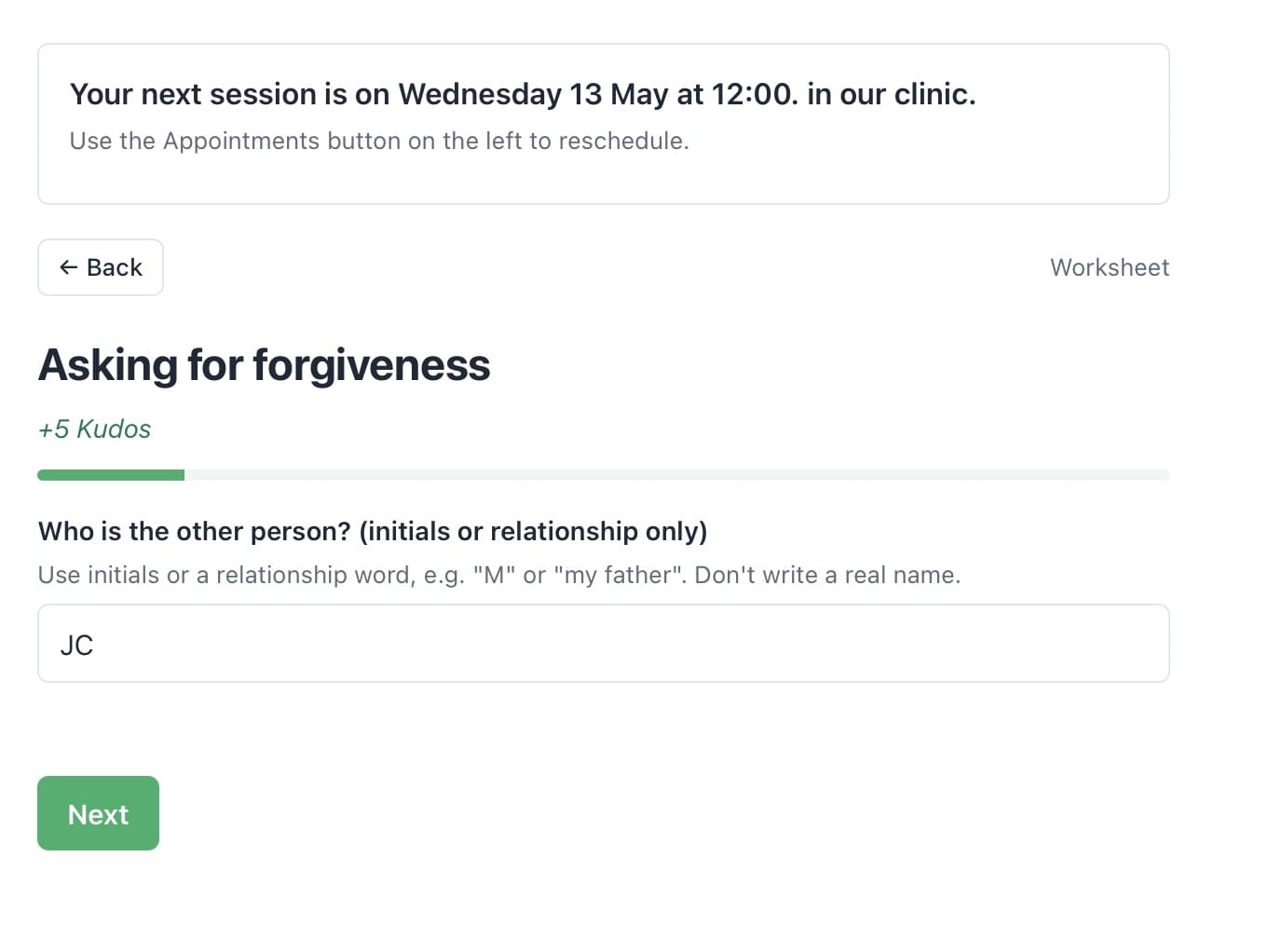
Then six long-text fields, in sequence, each on its own.
What did you do?
What pain did you cause?
How have you taken responsibility?
Have you assured them you won’t do it again, and how?
Have you apologised, and what happened?
Have you forgiven yourself?
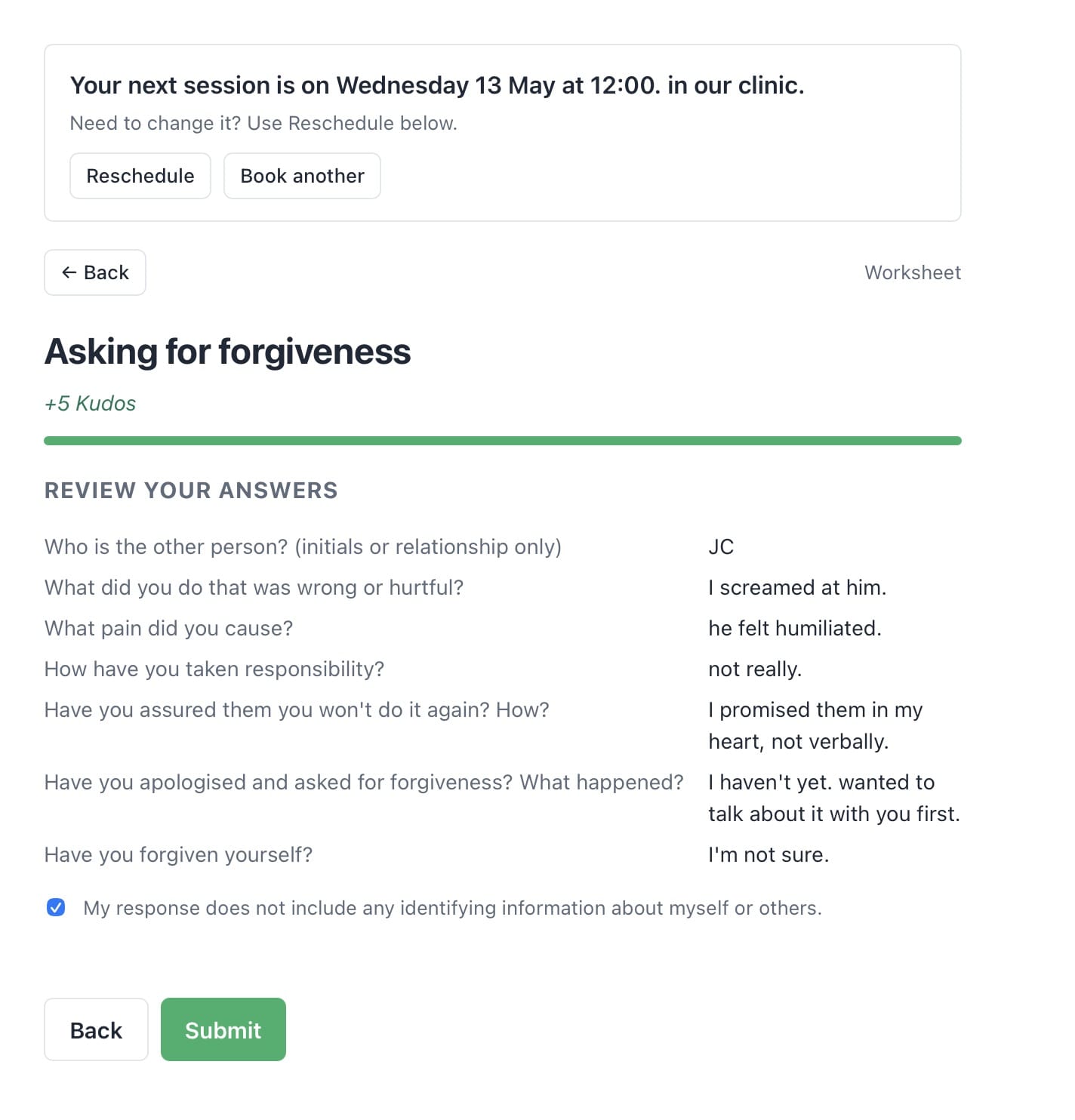
The forced ordering is the intervention. A client filling in the apology field before the harm field is the case for sending it back: come back to the second field and write what you did, in plain words, before you finish the apology field. The structure makes that conversation possible because the gap is visible.
It’s the right worksheet for uncovering unresolved guilt, post-affair reconciliation, family-of-origin work, and pre-death reconciliation. Run it alongside the Granting Forgiveness worksheet if the relationship needs both directions.
The last field, self-forgiveness, is the one most clients spend the longest on. Some leave it blank the first time and need a second pass after consultation in a session. When they leave it blank or write “not sure,” it tells you the work isn’t done with the apology, even if the apology happened and especially if it hadn’t.