How to Choose the Right CBT Homework for Depression

Depression flattens motivation, energy, and the appetite for cognitive work. A standard CBT thought record asks for narrative recall, evidence weighing, and alternative thought generation. None of those are within reach when your client is at the worst of a depressive episode.
The homework that fits depression is structurally different. Two forms I use often do most of the work.
The first is a daily activity log.
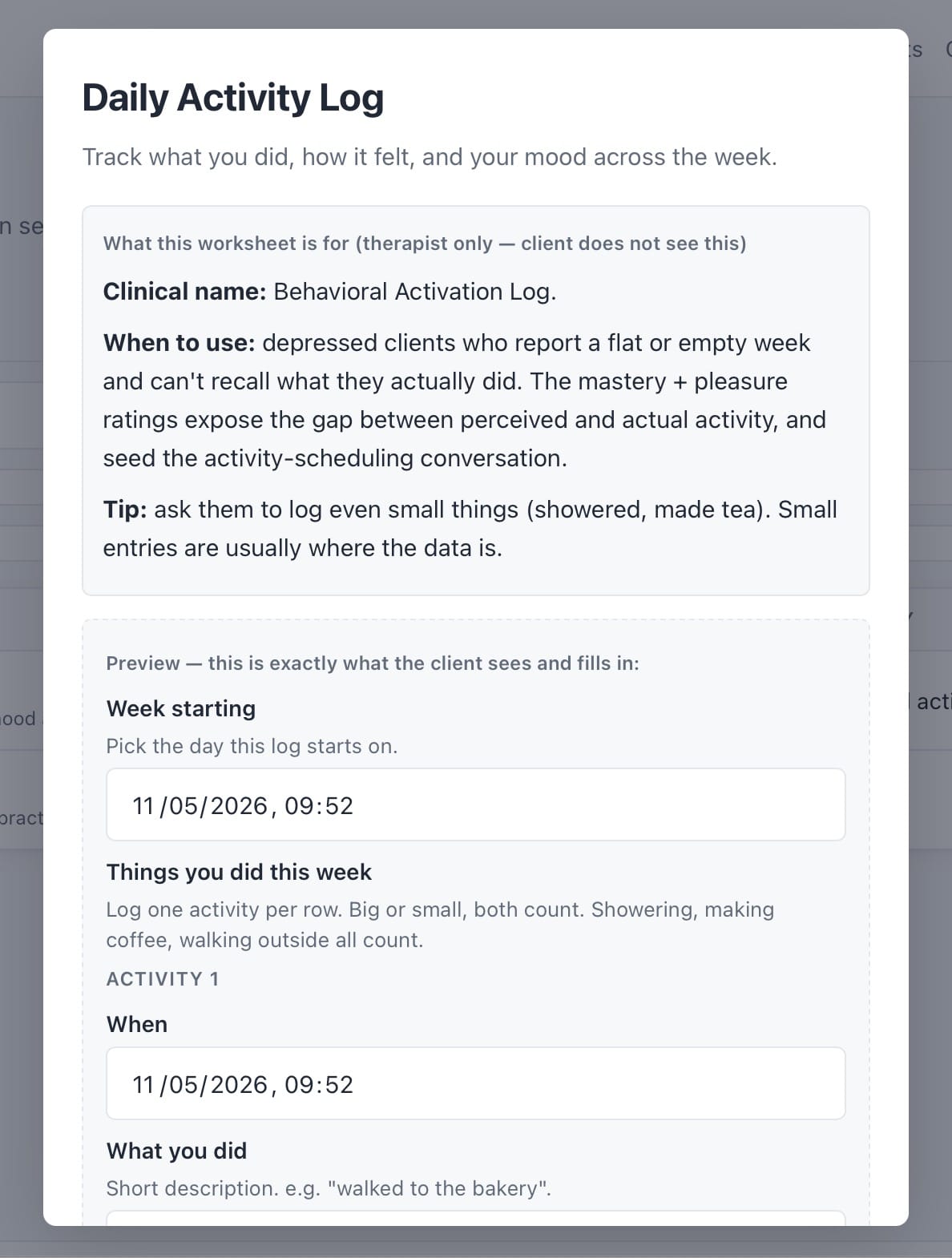
Three fields per entry: what you just did, how much mastery it gave you on a 0-10, how much pleasure on a 0-10. Filled in two or three times a day. The form takes thirty seconds. After a week of entries, you can see which kinds of activities produced even small amounts of mastery or pleasure, and prescribe more of those for the next week.
The second is a daily mood check at fixed times.
I ask the client to fill this out 3 times a day: Wake-up, midday, evening.
This is a simple custom worksheet I use in my-cbt. It takes one minute to create.
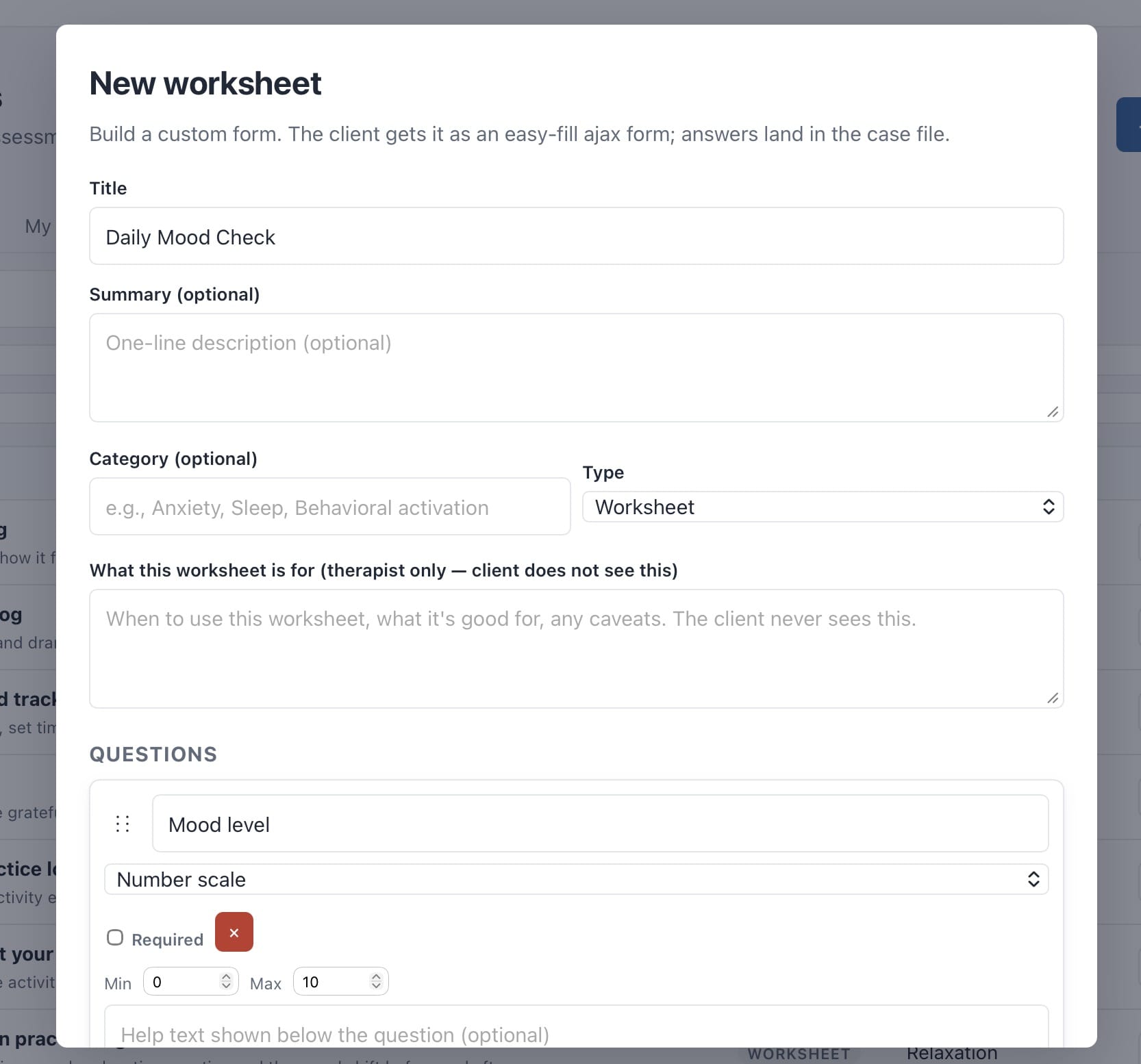
Two fields: mood 0-10 and one word for the context. Most depressed clients have a worse morning and a slightly better evening. The mood check makes the curve visible. After a week, you can see the morning trough sits at 2.5 and the evening at 4.5. The treatment plan now has actual numbers to move.
These two forms together produce a valuable data set.
The activity log shows what the client is doing. The mood check shows how they’re feeling at known points in the day. After three weeks, you can see whether activation is rising, whether mood is tracking it, whether the morning trough is lifting at all.
What you don’t send is a long thought record while motivation is at the floor. Cognitive challenge work asks for executive function the client doesn’t have. The form will sit blank, and the blank form becomes evidence to your client that they’re failing at therapy, which deepens the depression.
Save the cognitive work for when activation has already started shifting and the client has the bandwidth.
In my-cbt, you build the activity log and the mood check in the worksheet builder once, and assign both at the start of the week with a personal message telling the client when to fill each one in (morning, midday, evening for the mood check, and after each meaningful activity for the activity log). Each form is a thirty-second job on the phone. Both sets of submissions save to the case file timestamped, so you can read the activity entries and the mood entries together and see whether the rhythm is rebuilding without flipping between paper logs.
The right homework for depression is small, frequent, and behavioural.
Skip the cognitive work until the client has the energy for it. The data you collect from the simpler forms is the lever for the recovery curve.