CBT Worksheet: Opposite action log

Opposite action is one of the most clinically useful skills in DBT and one of the easiest to misapply. The principle is simple: when an emotion is generating an urge that doesn’t fit the situation or doesn’t serve the client’s values, do the opposite of what the urge wants. The implementation is harder. The client has to identify the urge accurately, identify the actual opposite, and then act against the urge in the moment, all while the emotion is loud.
The clinical case for the worksheet is the gap between knowing the impulse will backfire and stopping it anyway.
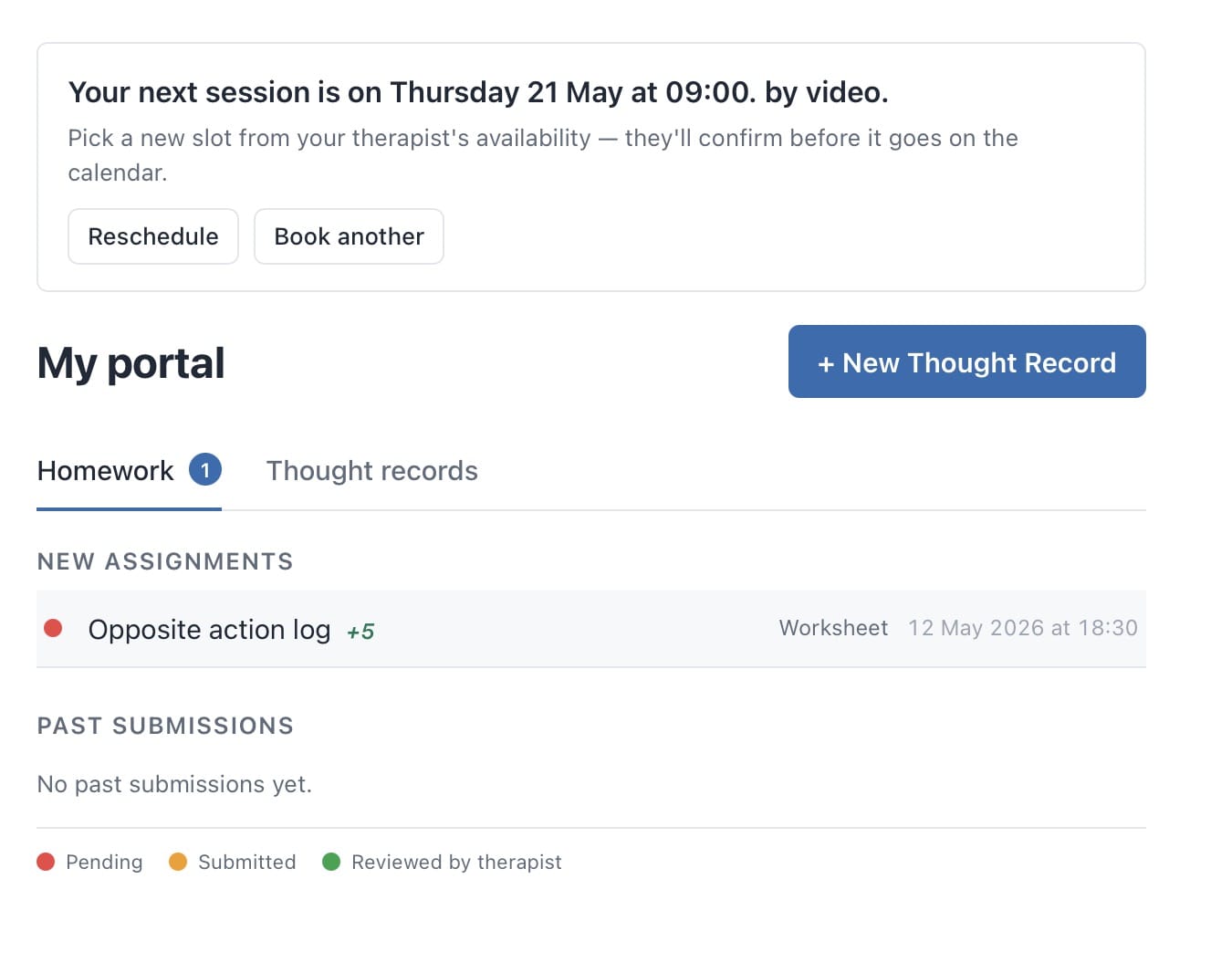
Most clients with affect-driven impulsive behaviour can articulate that the eating/drinking/scrolling/withdrawing won’t help. The articulation doesn’t change the behaviour. What changes the behaviour is accumulated evidence that the opposite action actually pays off. Each successful opposite action builds the evidence. Without a log, the evidence stays invisible.
Use it with clients whose presenting problems include impulsive eating, drinking, lashing out, withdrawing, scrolling, shopping, or self-harm urges. Use it as part of broader DBT-influenced work, alongside emotion regulation skills and distress tolerance. Don’t use it without consideration in cases where the urge is serving a protective function the client doesn’t yet have alternatives for.
The clinical patterns to catch:
The most common one: clients who write “opposite action” entries that are still avoidance in disguise. Urge to drink, opposite “watch TV alone.” That’s not opposite action. The opposite of numbing is feeling.
The opposite of withdrawal is connection.
The opposite of attack is gentleness.
Help the client get the direction right. The fact that the worksheet keeps coming back with avoidance-as-opposite-action is itself the clinical material to bring into session.
A second pattern: clients whose entries show the opposite action chosen and the outcome rated as awful. Worth reading carefully. Sometimes the opposite action was right but produced acute discomfort the client wasn’t prepared for. Sometimes the wrong opposite was selected. Sometimes the urge was actually serving a real protective function and “opposite action” wasn’t the right intervention. The worksheet doesn’t tell you which. The conversation in session does.
In my-cbt, the Opposite Action worksheet is one of the bundled system templates.
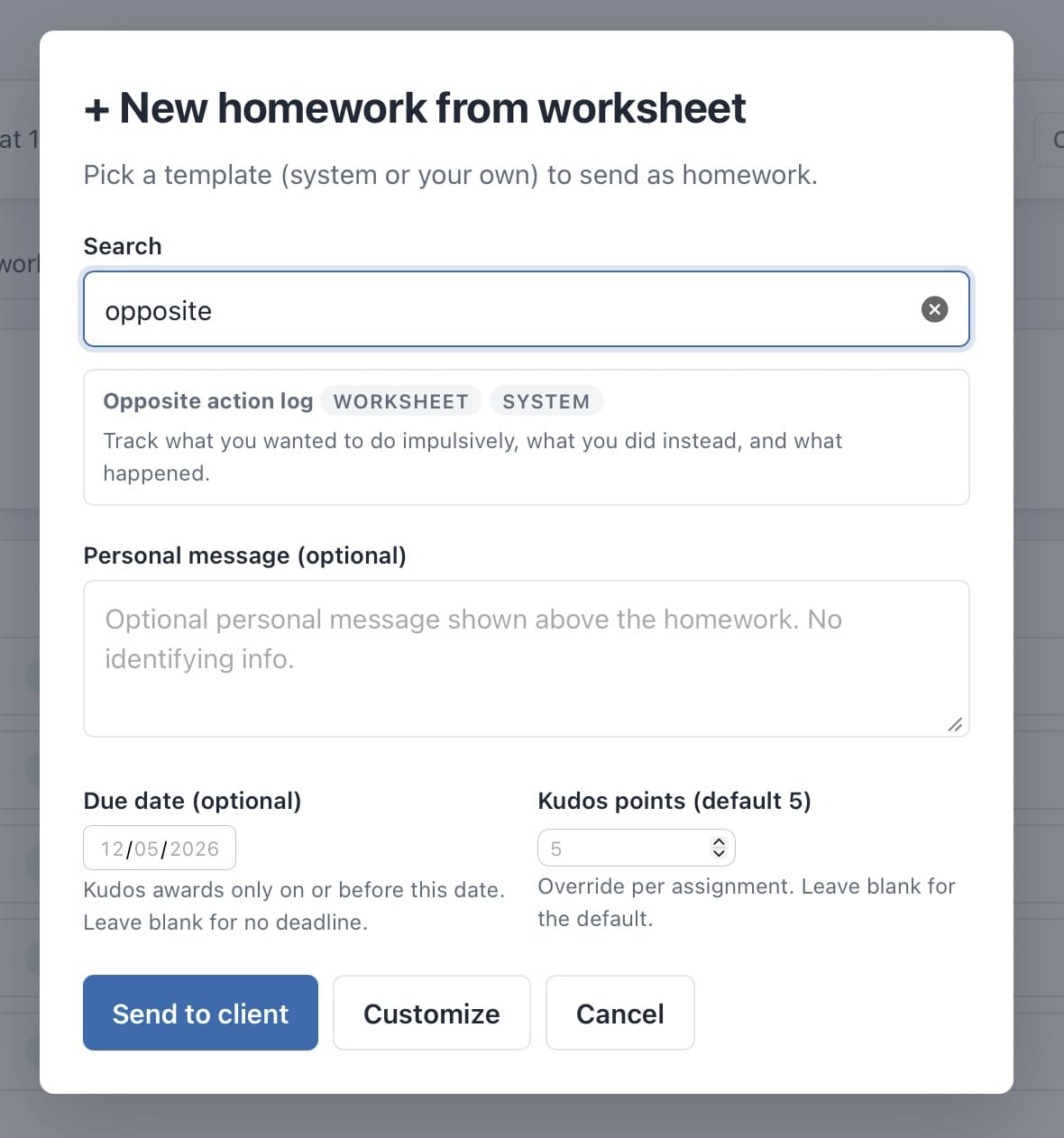
Assign it after teaching the opposite-action skill, with a personal message reminding the client to identify the genuine opposite, not the convenient near-opposite. Submissions save with timestamps and you can read three or four entries together to see whether the skill is taking shape.