How to Organize Group Programs for CBT Clients

Group CBT programmes are an underused income stream for solo practices.
A six-session group with six to ten participants produces revenue across nine clinical hours that’s typically two to three times what the same hours of individual sessions would bring in.
The barrier most therapists hit is marketing with the added administrative complexity, not clinical confidence.
The formula my cleints use, that works for a first group programme:
Six weekly sessions.
90 minutes each.
Six to ten participants.
In-person or online.
A specific clinical focus (anxiety, low mood, panic, perfectionism).
Pre-set curriculum and worksheets, designed before the first cohort runs.
The suggested curriculum:
Session one: introduction to CBT, the cognitive model, what the next six weeks will look like. Plus the first worksheet assigned for next week.
Sessions two through five: each session covers a specific clinical theme (cognitive restructuring, behavioural experiments, avoidance work, etc.) with a brief teaching component and group work on participants’ own examples.
Session six: relapse prevention, plan for after the group, optional follow-up resources.
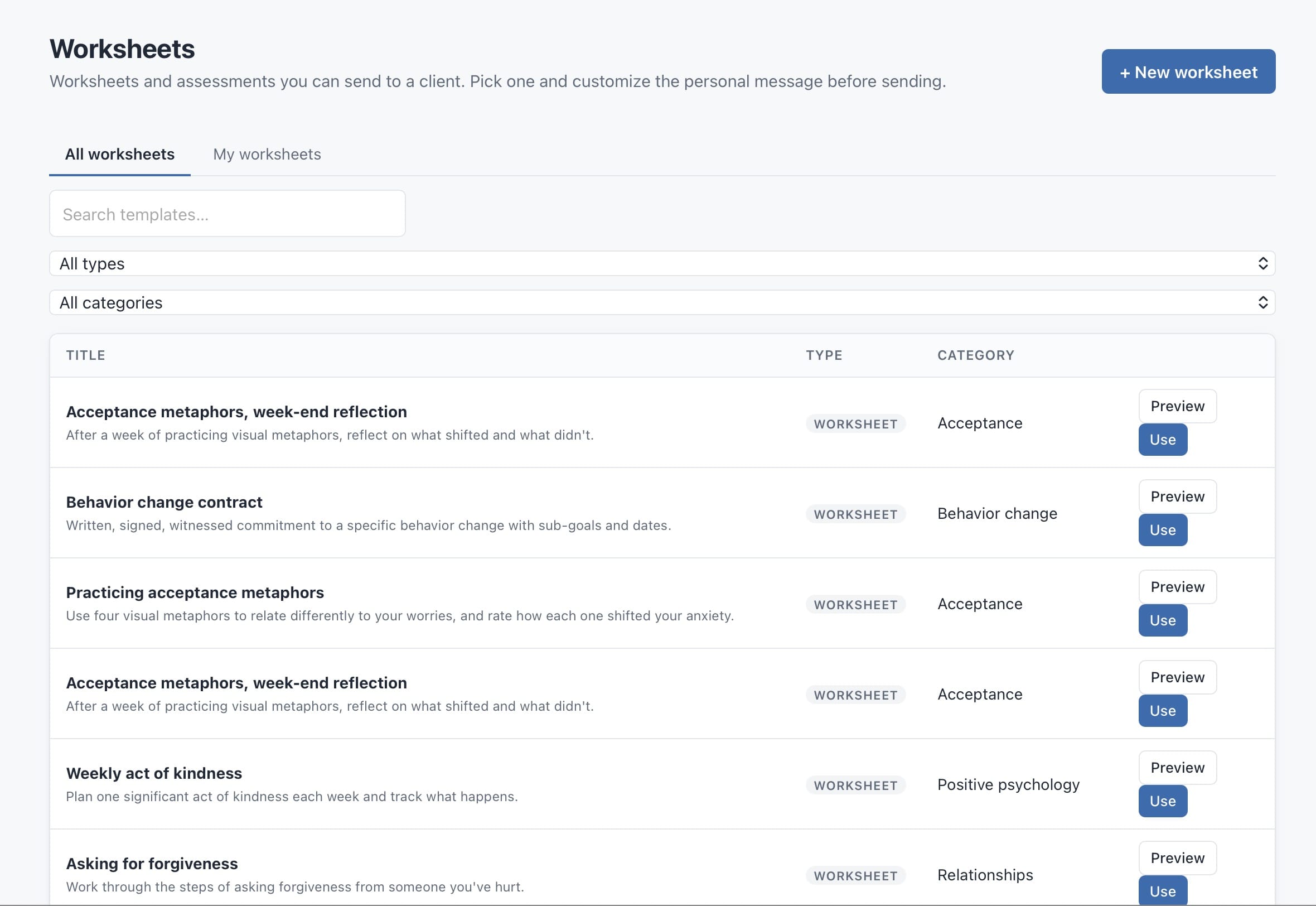
The worksheets are the same across the cohort. Pick the relevant one from the worksheet library each week. Each participant gets the same homework after each session.
How to get people to sign up
Your my-cbt business coach can create for you a landing page with the programme description, the dates, the cost, who it’s for. He will also create a time-limited booking wizard in case you want to manage more than one group at a time.
The pricing is an important consideration. A typical group session at 35 to 50 dollars per participant per session is appropriate. Across six sessions and eight participants, that is 1,680 to 2,400 dollars in revenue from nine clinical hours in total.
Follow-ups
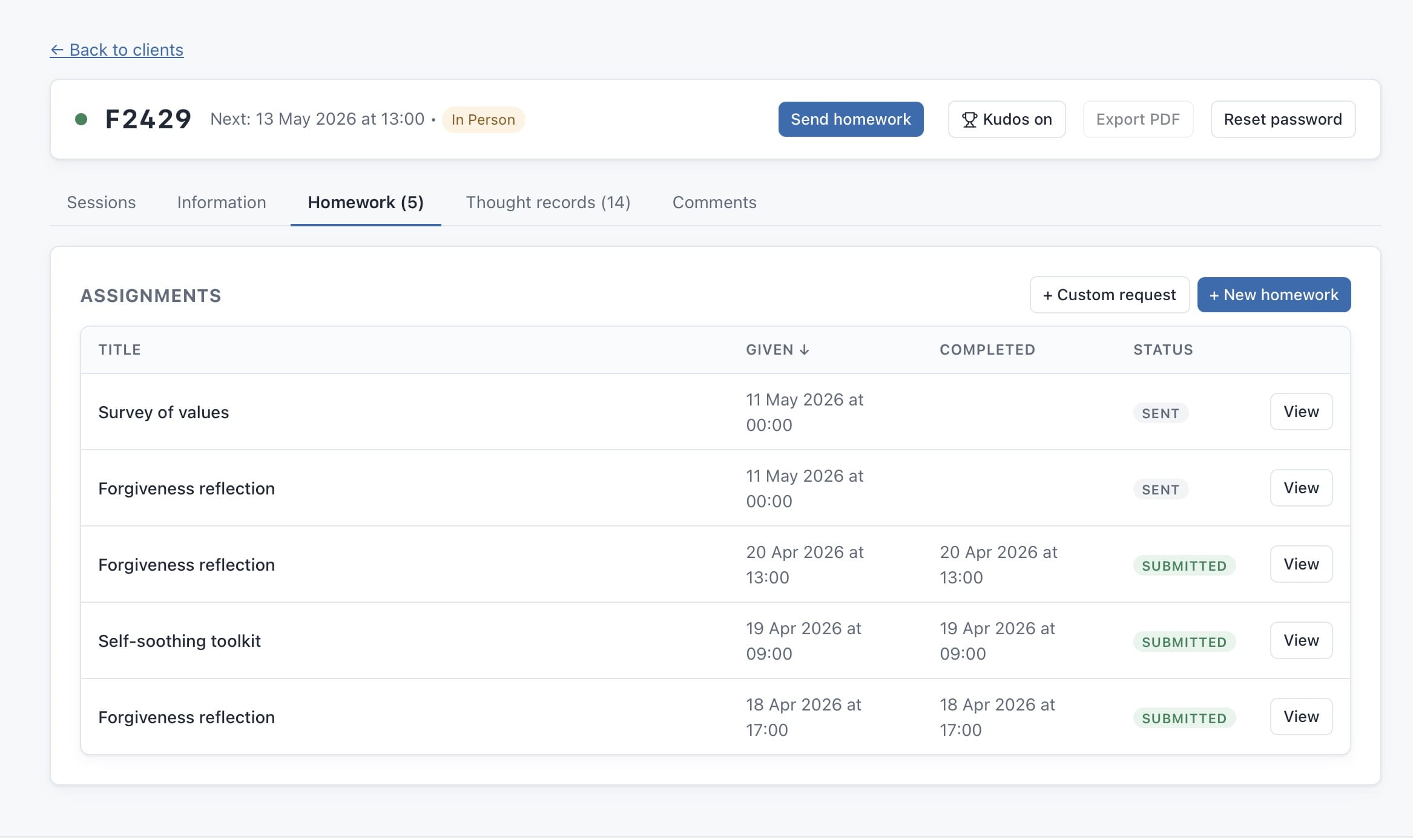
In my-cbt, each participant has their own case file with their own sessions, homework, and notes, the same way an individual client does.
The worksheet library already has the templates you can use across the cohort, and you assign the same worksheet from each participant’s case file in turn.
Submissions from each participant are saved in their own case file timestamped.
Reading the few case files in sequence before each group session takes a few minutes and tells you what is showing up clinically across the cohort, which is what you teach to next session.
Where to begin
If you’re unsure of how to start and run CBT group sessions, ask your my-cbt business coach. He will analyze the opportunities that currently exist in your location and help you set it up correctly.
What you need to think about before announcing your group sessions:
The inclusion and exclusion criteria (who fits the group and who doesn’t).
The cancellation policy for the upfront payment.
The structure of the in-session group work (rotating examples, paired exercises, structured teaching).
The safety routing for any participant who is in active crisis.
The first group you lead is a learning experience. The second cohort is faster to set up because the materials and the flow are reusable. By the third cohort, you have a programme that runs efficiently and produces meaningful revenue alongside your individual caseload.