Why Clients Avoid CBT Homework and How to Fix It

The first frame we need to drop is that avoidance is laziness or low motivation. It almost never is. In fact, although I’m only 8 years in practice, I have yet to meet a client who pays me for a session and lacks motivation to change.
I see a lot of CBT therapists who are still using paper forms, and if you do too: that’s the actual reason your homework completion rate is stuck.
Think about what you’re handing your client when you give them a thought record form on paper. Every single time:
They have to remember to take it home with them.
They have to find a private place to sit down and write,
They have to find a good hiding place for it, because if their partner or roommate or parent picks it up and reads “I had a thought that I wanted to drive my car into a wall”, that’s a conversation the client doesn’t want to have.
They have to write coherently and legibly, in real ink, while panicking.
They have to keep the paper somewhere they’ll remember, on them, so they can fill it in at the moment a panic spike hits, which means carrying around a folder full of their darkest thoughts all week.
And they have to bring the paper back to the next session, or write a clean version of it, or remember what they were going to say from a folded page they pulled out of a drawer that morning.
Most clients won’t do any of this.
They’ll do it once. By the third week, the form is in a drawer or lost or “I’ll do it tonight, promise.”
Your clients do care about their progress in therapy, but the format you’re using creates friction and demands more energy and personal risk than they can spend on something that hasn’t paid off yet.
The version that works: A portal that runs on the device they’re already holding all day.
Your client gets a quiet moment on their lunch break or on the bus.
They open my-cbt, see the assignment, and fill it in with a couple of slider taps and a thirty-second voice note (every modern phone has speech-to-text).
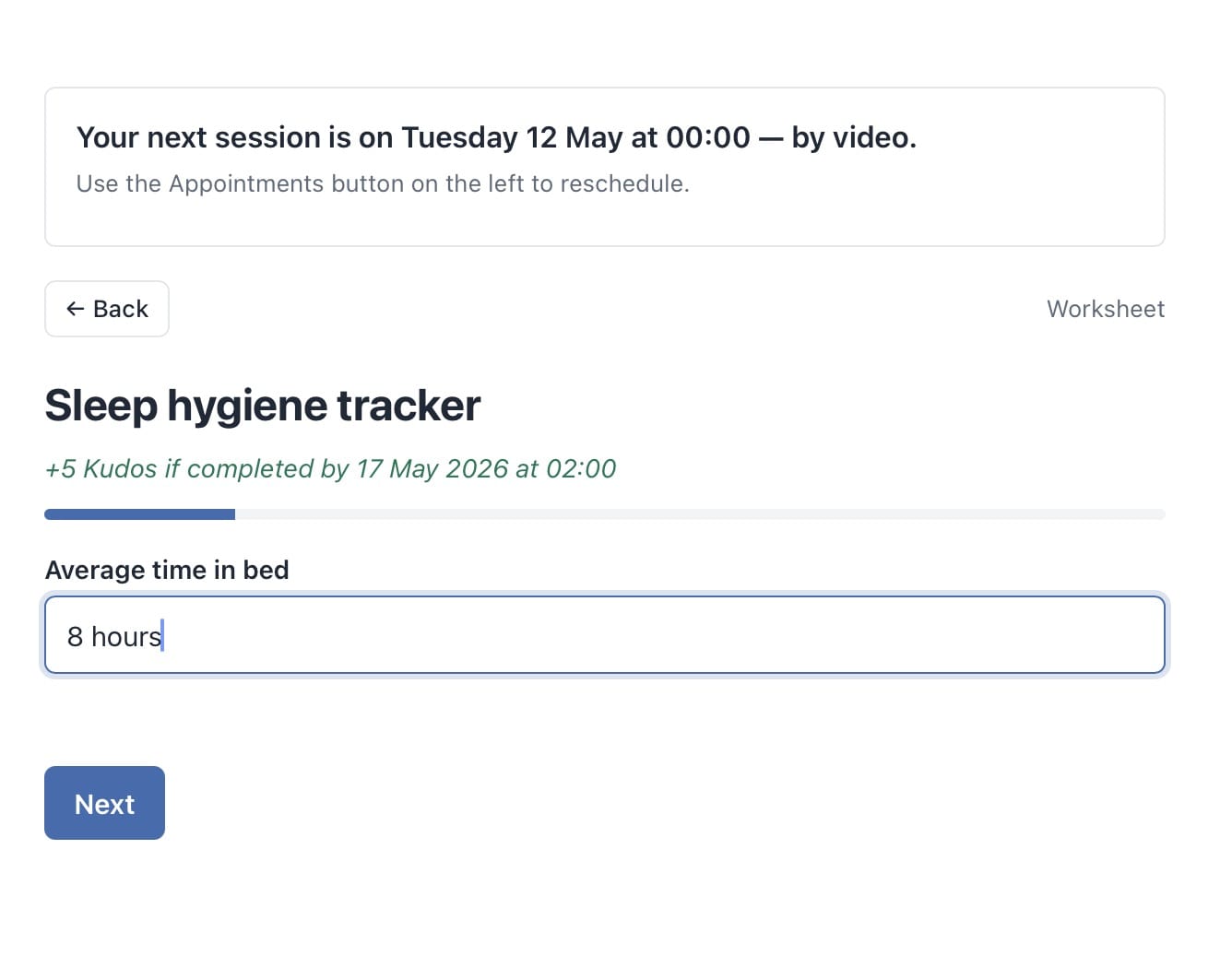
- They submit. It took three minutes. Nobody saw what they wrote.
Two things change because of the easy to use format.
The first is that completion goes from sporadic to consistent: three submissions a week instead of zero.
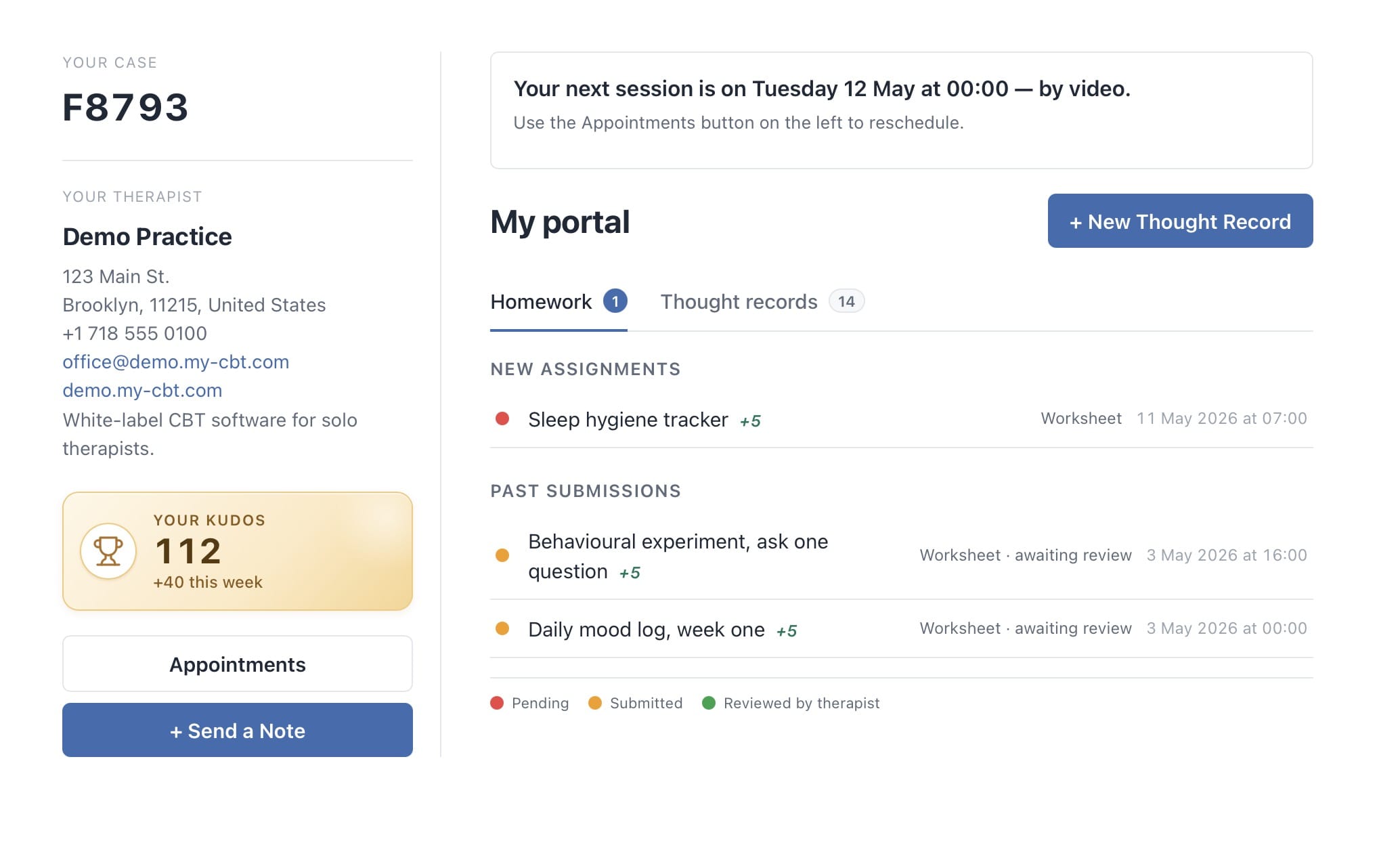
The second is that what they write is more honest. The client portal in my-cbt is anonymous on their side: it shows a case number, not their name.
Shame about handwriting goes away.
Worry about a partner reading their thought record goes away.
They write what they thought, because the format gives them the privacy that a paper folder never could.
They can’t lose or forget the form because it’s always accessible on their phone.
If you set a Kudos reward on each assignment, the work gets a small visible payoff every time they submit. That small payoff uses the same dopamine loop their phone is already wired to deliver. You’re putting it to work for the clinical project instead of social media.
And if your client is still avoiding after the format changes, then the avoidance is telling you something clinically. Until then, assume it’s your responsibility to make it impossible for your clients to fail.